The problem
Somebody downwind can smell your process.
Odour lands in three places at once. Inside the plant, on safety. Outside the fence, on environmental quality. And in the town, where the complaints begin.
An odour complaint is a reading taken by a neighbour, with a nose. It is the one measurement you cannot calibrate, so odour is treated here as a chemical problem rather than something to mask.
Why the usual systems fall short
Scrubbers and biofilters move the problem. They do not end it.
Scrubbers and biofilters mitigate part of the problem. That is the honest summary, and also the limitation: part of it, with high maintenance and environmental burdens attached.
Scrubbers and biofilters
- Mitigate part of the problem
- High maintenance that never stops
- Water, chemicals and secondary waste
- Biofilters channel after heavy rain
PURA, indirect plasma
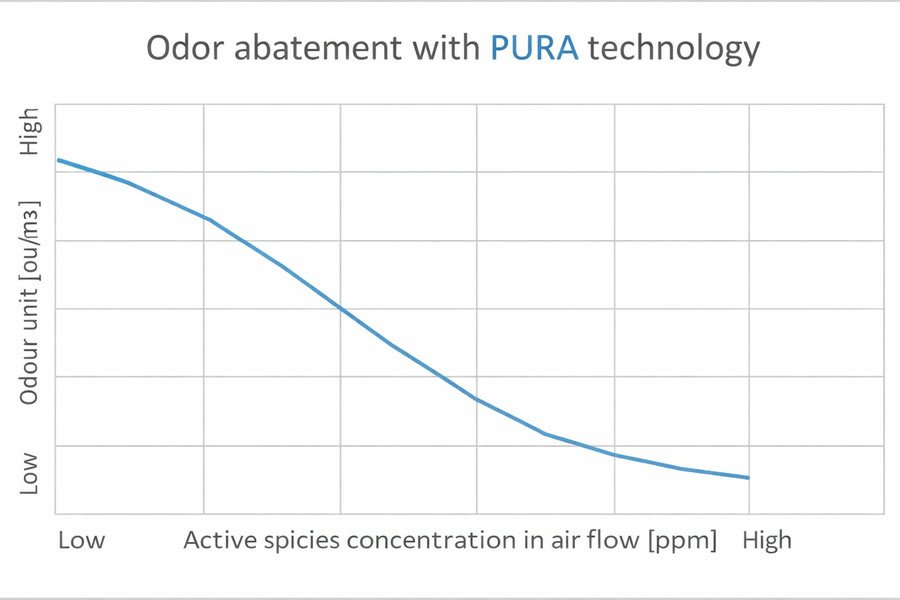
- Over 90% abatement
- Maintenance is infrequent and its cost is low
- No acids, no water, no secondary waste
- Plasma modulated to the flow, so efficiency holds over time
PURA replaces traditional oxidisers, activated carbons and biofilters.
The molecule is converted inside the duct it is already travelling down, so nothing is left to collect.
Indirect plasma treatment
Clean air goes into the reactor. Activated air goes into your duct.
This is the indirect system. The reactor sits outside the contaminated duct and never sees the process gas. It draws in clean external air, activates it, and injects that air into the existing ductwork through one injection point.
Clean external air is drawn in
A modest intake duct takes ordinary outside air. Nothing wet or dusty enters the machine.
The air becomes plasma-activated
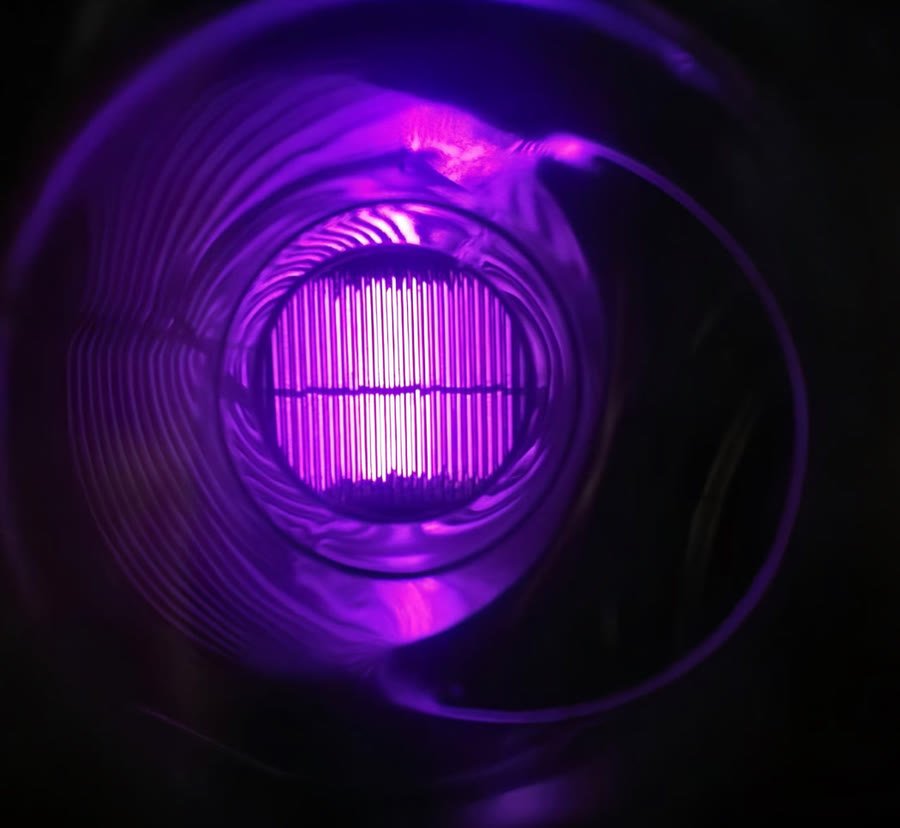
A non thermal discharge turns it into plasma-activated air carrying reactive oxygen and nitrogen species. A field, not a flame: the air is never heated.
It is injected into your duct
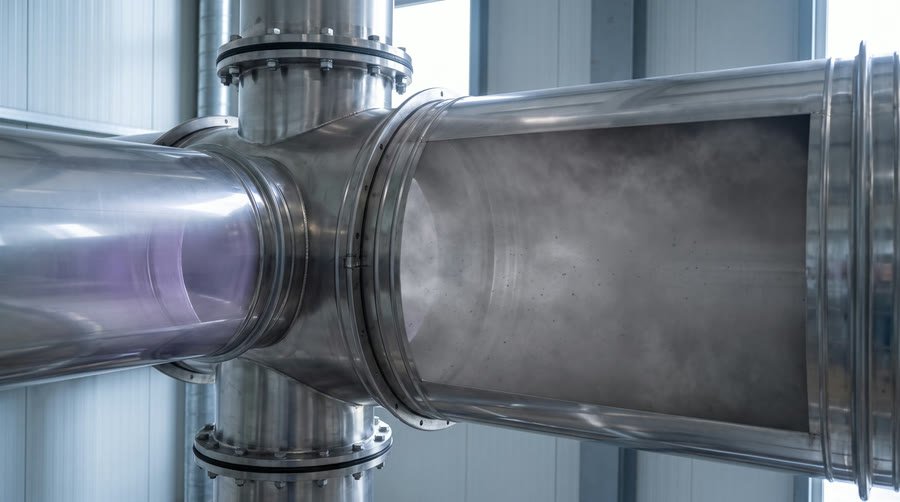
One injection point is cut into the duct you already have. The activated air meets the odorous stream and the reaction runs from there.
A small activated flow treats a large process flow
On the reference case, 1,000 m³/h of plasma-activated air is injected into a process flow of 50,000 m³/h. The reactor handles only the clean air it activates, so the hardware is small next to the duct it treats.
After the injection point the duct itself is the reaction vessel. The reaction path is about 2 metres before the stack, usually pipework the plant already owns. Analysis is taken at the inlet, on first contact with the plasma, and at the outlet after that run. Abatement is over 90%.
The chemistry
The species carried by the activated air are the reactive fragments of ordinary air, grouped as ROS, reactive oxygen species, and RNS, reactive nitrogen species. The oxygen radicals are •OH, •HO2 and •O. The odour-bearing substances are sulfur compounds, and the reaction is written OH + O + HOO + CS-CH3 giving H2O + CO2 + SO2.
In plain words, the reactive species attack the odorous sulfur compound, CS-CH3, and convert it into water, carbon dioxide and sulfur dioxide. The molecule that carried the smell stops existing. It is not adsorbed and not masked, so there is no bed to saturate.
What it treats
Odours first. Bacteria and mould carried in the flow. And a small part of the VOC load, in the same pass.
The plasma is set to the line
The plasma is modulated to the flow rather than fixed at commissioning, so when the load changes with the shift or the product the setting is changed with it rather than left alone.
Nothing added but a field
No water, no chemicals, no consumables. Nothing is dosed and nothing is burned, so no sludge goes out, no methane goes in and the treatment makes no CO2. The reactor is cabinet-sized, modular and plug and play, and it is sized to the flow of the line.
Plasma-activated air injected: 1,000 m³/h
Process flow treated: up to 140,000 m³/h
Injection points added to the ductwork: one
Reaction path along the duct: about 2 metres
Analysis taken: at the inlet and at the outlet
Abatement: over 90%
Why a plant chooses indirect
Three plain reasons.
The existing ductwork is kept. There is no reaction chamber to buy and find room for: the duct that already carries the flow is where the reaction happens, and on most lines the roughly 2 metre path is pipework already there.
Only one injection point is added, and that is the whole physical change to your line. The clean air intake is a separate duct that never touches the process side.
And the plasma hardware never touches the dirty gas, so it stays clean. Fouling is why many in-line treatments need servicing sooner than promised. Here there is nothing to foul, because the process gas never gets in.
If VOCs are your main target rather than odour, read VOC removal, which describes the direct plasma system.
There the plasma is generated inside the duct and the whole process flow passes through it.
Run the reactor
Hold it, and watch what comes out.
Press and hold the mark. The plasma comes up to power the way it does on a real line, matched to the flow. Let go early and it eases back down. Take it all the way and you get the list of everything the process does not leave behind.
- No spent media to change out
- No water and no chemicals consumed
- No methane burned
- No CO2 produced, and no waste to dispose
Installations
Some of them, with their flows.
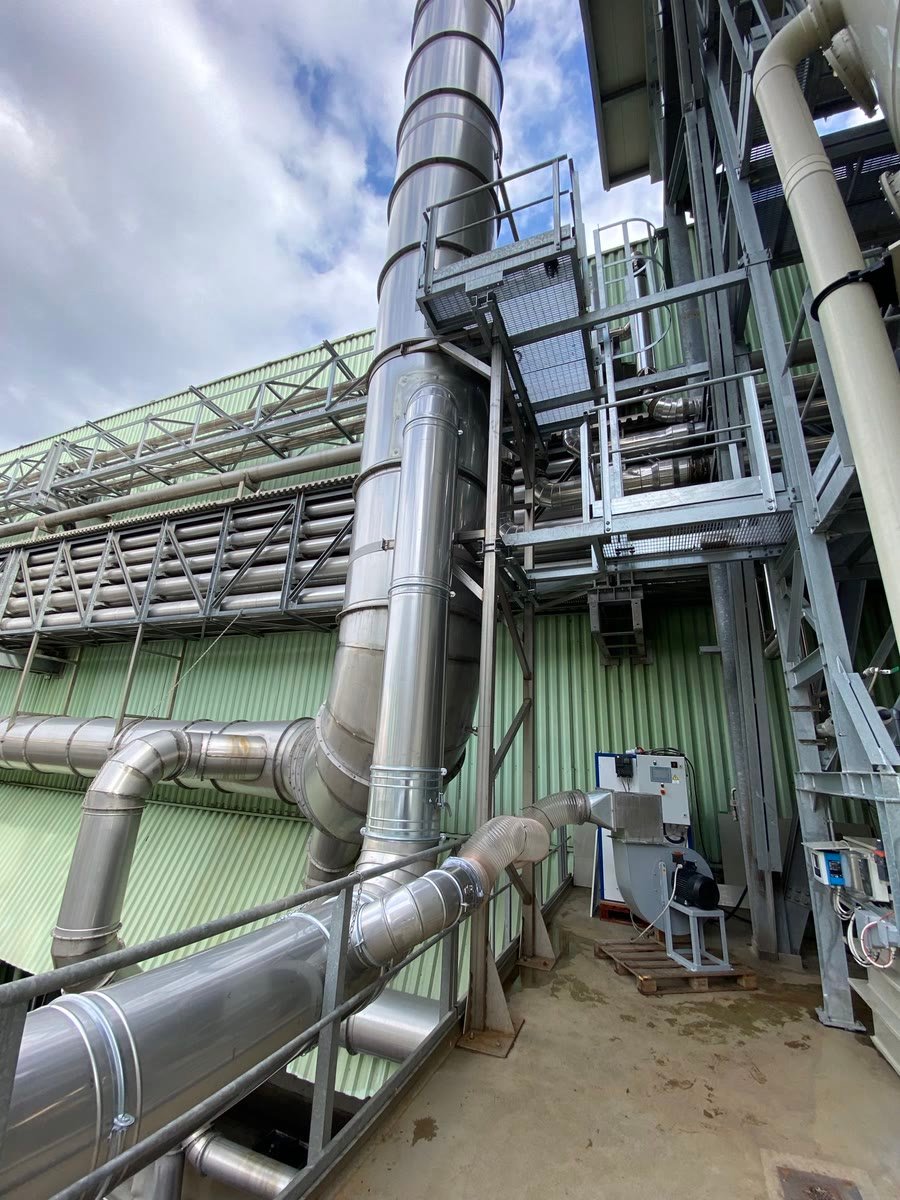
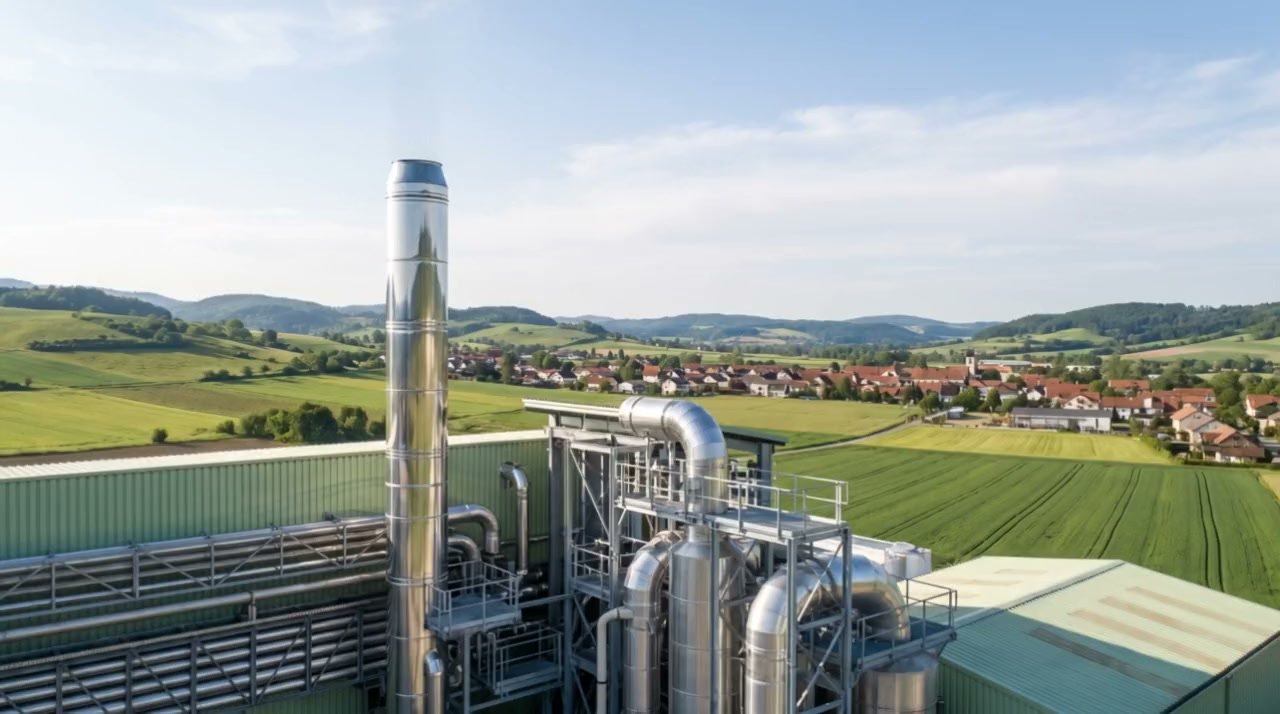
More than twenty systems are deployed, on lines from 1,000 to 140,000 m³/h. The photographs are our own units on site.
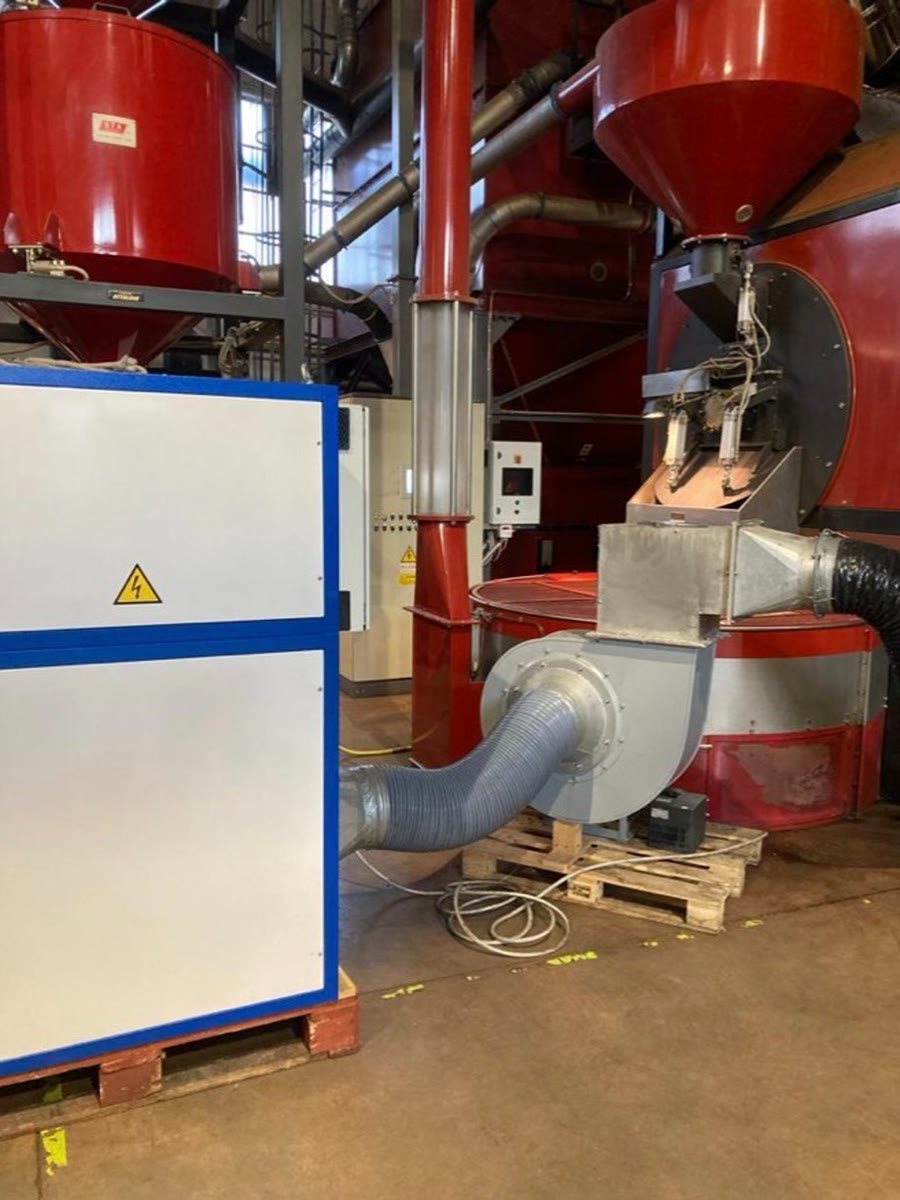
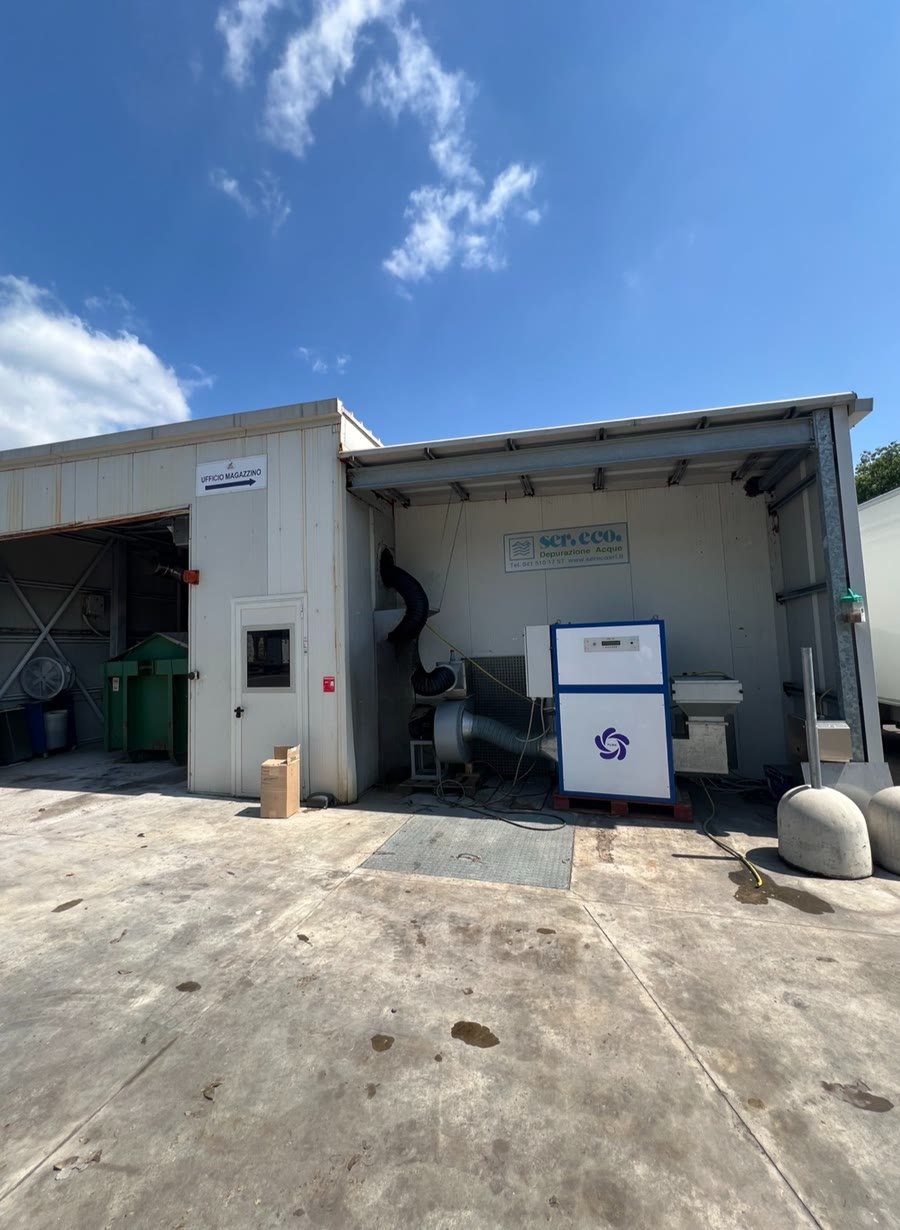
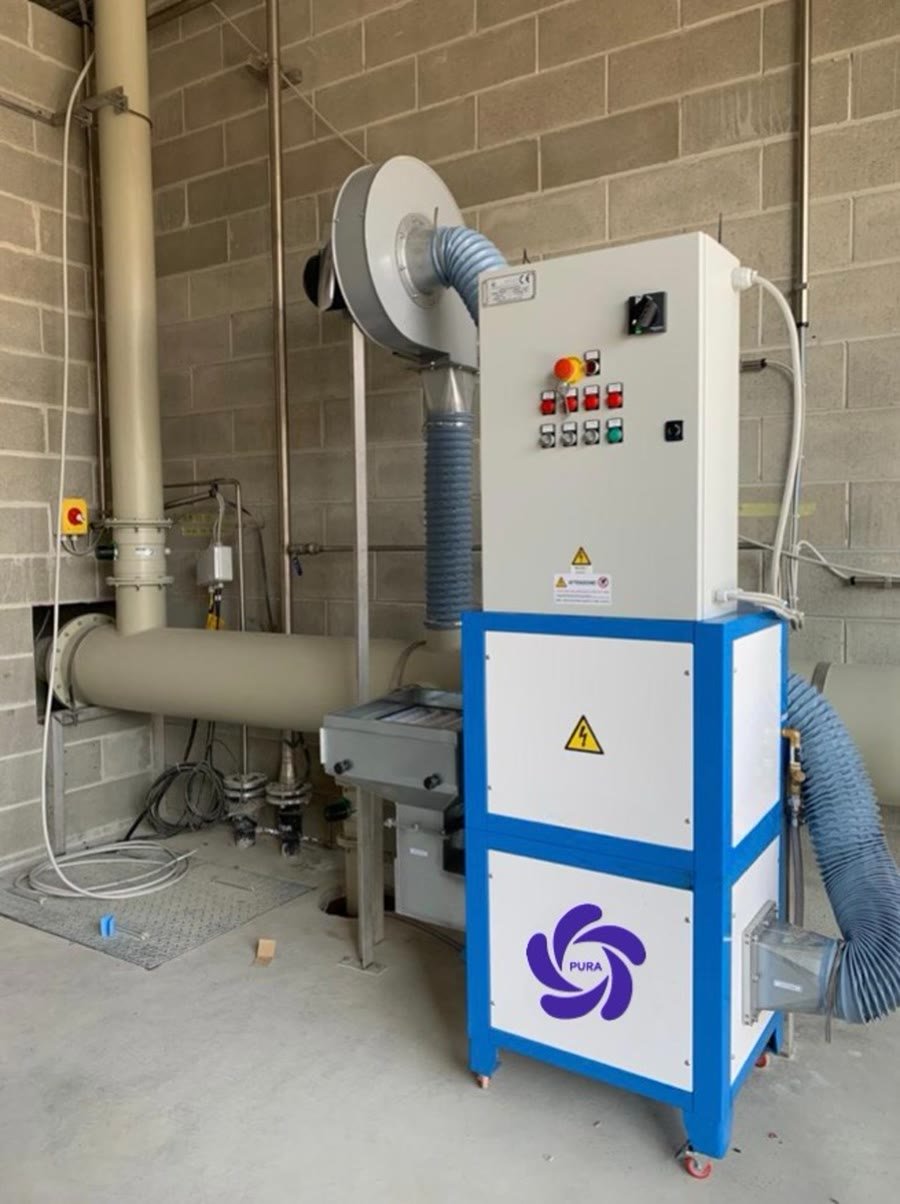
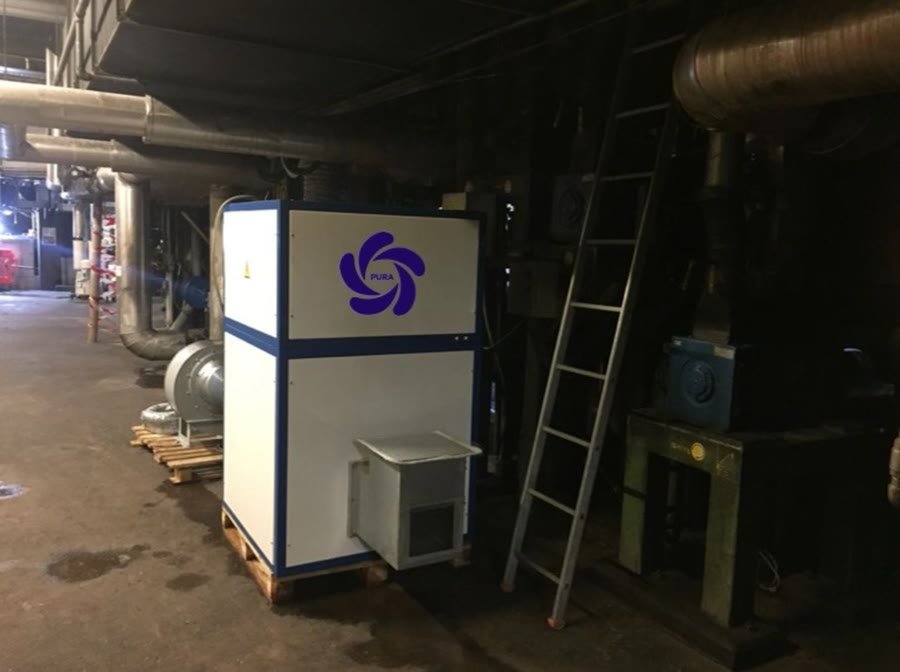
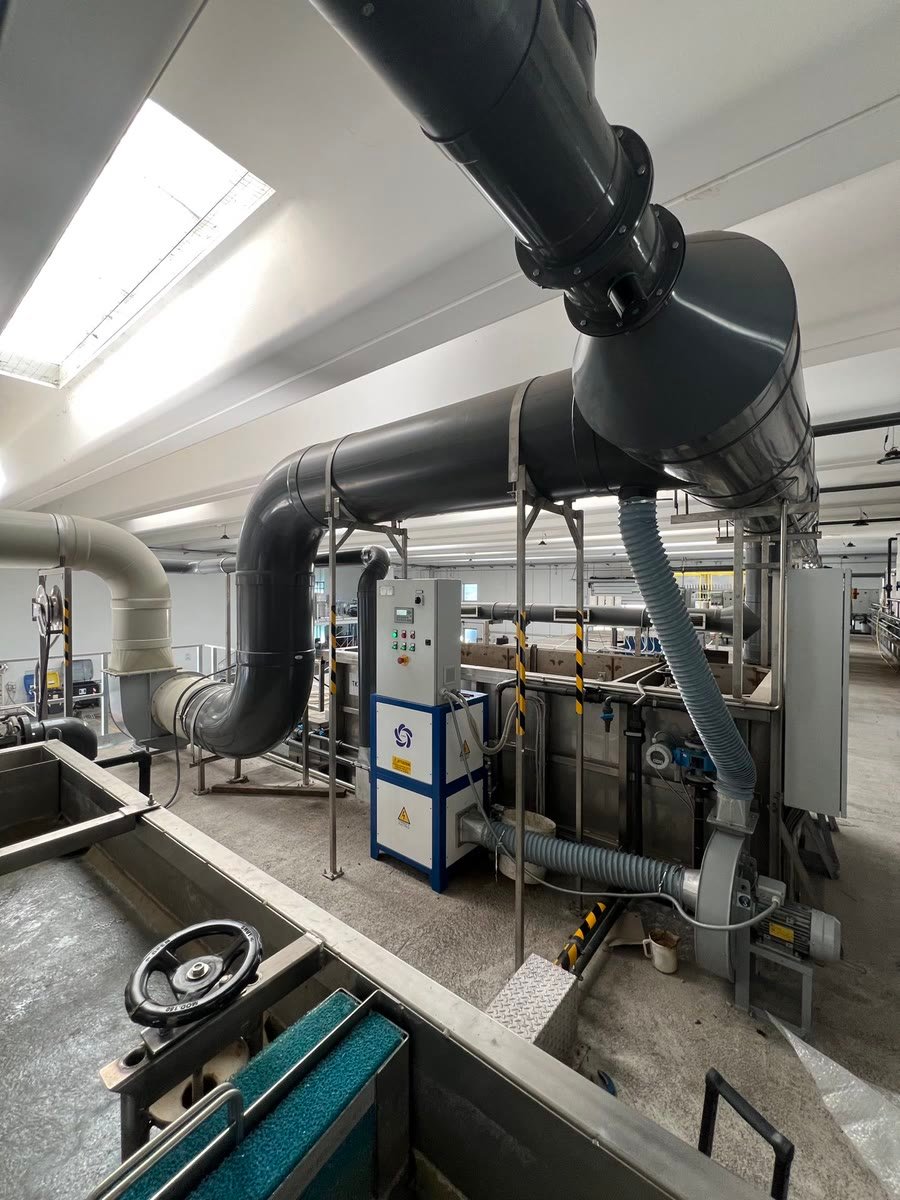
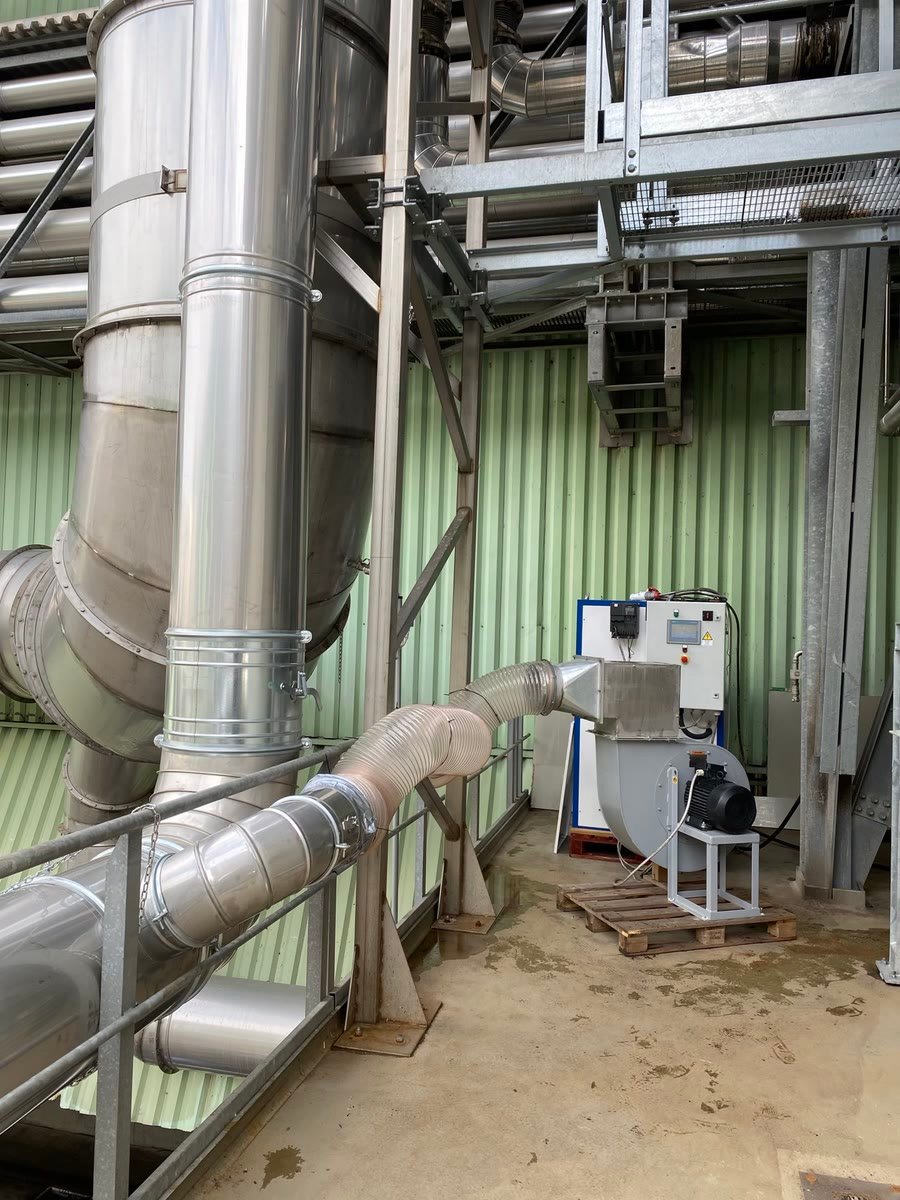
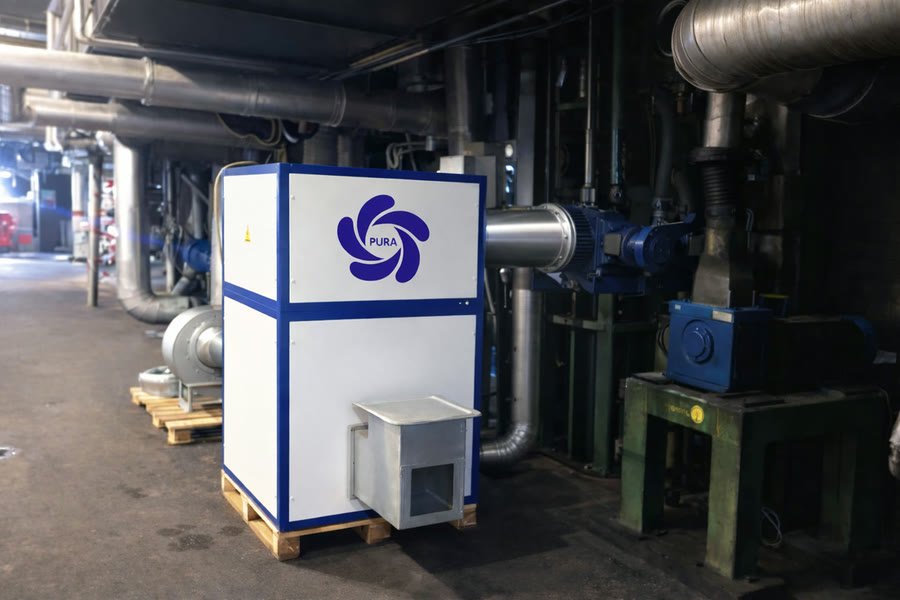
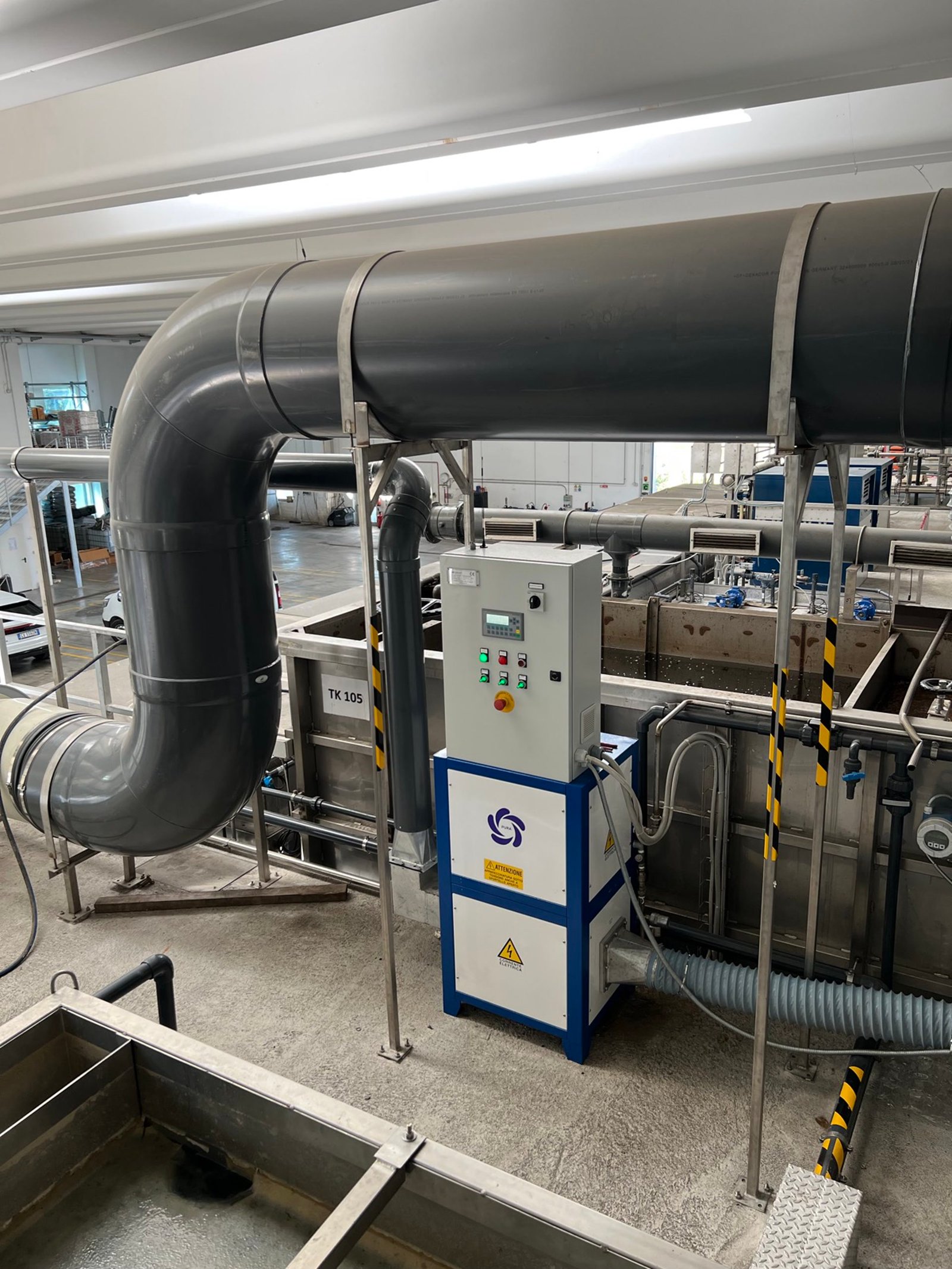
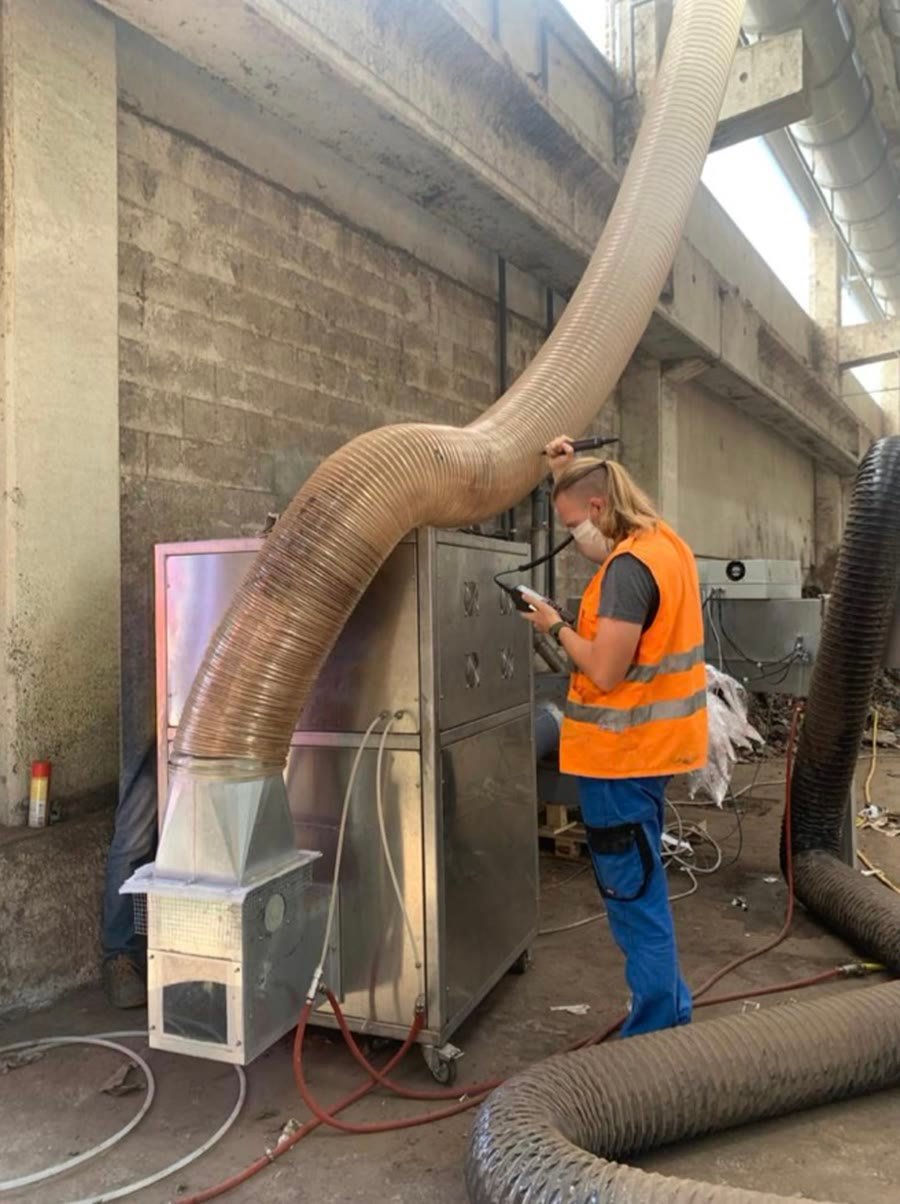
The same chemistry runs on VOC lines in brake pad production and automotive painting, in the direct arrangement. See VOC removal.
Seen on site
The units, running.
Our own footage from installed odour lines. Nothing loads from YouTube until you press play.
Pressing play loads the player from YouTube, which sets its own cookies.
The objections we hear
Straight answers.
Does our dirty air have to pass through your machine?
No, and that is the difference between this system and the direct one. The reactor takes clean external air only. Your process gas keeps flowing down the duct it is in now. The two meet at one injection point in your own pipework.
How much activated air do we need for a large flow?
Less than people expect. On the reference case, 1,000 m³/h of activated air treats 50,000 m³/h of process flow. The species do the work, not the volume.
How much duct do you need after the injection point?
About 2 metres of reaction path before the stack, which on most plants already exists. That run of duct is where the reaction happens, and the outlet analysis is taken at the end.
Our flow changes with the shift. Can it cope?
Yes. The plasma is modulated to the load the line carries, and re-set when that load changes. The largest odour line installed runs at 140,000 m³/h, on a paper mill.
We have bacteria or mould as well as odour.
The same activated air acts on all of them, and on a small part of the VOC load, in one pass. If VOCs dominate, read the direct system on the VOC removal page.
Send us your flow
Tell us the number and the smell.
The flow rate in m³/h, the sector and what the odour is are enough for a first honest answer. Tell us how much straight duct runs before the stack and we will say where the injection point goes.
The odour is converted inside the duct you already have. Send us yours.
Send us your flow VOC removal, the direct system