The problem
Odour has become a permitting question.
Odour now sits inside the permit. For the biological treatment of waste the European BAT conclusions give an outlet range of 200–1,000 ouE/Nm³, and several Italian regions set 300 ouE/m³ at the outlet of the abatement plant. The first figure to know is not how much a system abates, but how much odour is allowed to leave your stack.
The second difficulty is that odour is not steady. It changes with the shift, the product and the season, and a very low concentration of sulfur compounds is enough for somebody downwind to notice. A system sized on the average struggles on the peaks.
The technologies
Six ways to remove odour, and what each one asks in return.
Nearly all of them work. The difference is what they leave you to manage every day.
Biofilter
Bacteria that eat the odour
A bed of organic media hosts the bacteria that degrade the molecules. It works well on large, steady flows, but it is sensitive to humidity and temperature and can channel after heavy rain.
Large footprint, media to maintain and replaceScrubber
Washing with water and chemicals
The air passes through a tower where water, often dosed with reagents, captures the soluble molecules. Effective on acidic or basic compounds, less so on poorly soluble ones.
Water and chemicals consumed, effluent to handleActivated carbon
Trapping, not destroying
The molecule stays adsorbed on the carbon. Simple and quick to install, excellent as a final stage, but the bed saturates and what comes out is handled as waste.
Periodic swaps and disposal of the spent mediaThermal oxidation
Burning everything at 700°C
The oxidiser raises the air to the temperature at which the molecules break down. It is the most drastic answer, and on very high solvent loads it makes sense.
Methane, CO₂ and a high investmentMasking agents
Covering the odour
Products are sprayed to cover or neutralise the perceived smell. Cheap and quick to install, but the molecule is still in the air leaving the stack.
Product to keep buying, and the problem staysCold plasma
The air becomes the reagent
A non thermal discharge turns the air into reactive species, which break the odorous molecule apart and convert it into stable, harmless compounds. Nothing is trapped, so nothing is left to dispose of.
Electricity, and infrequent maintenanceNo technology is always the best one.
The first four move the problem: waste to dispose of, effluent to treat, a gas bill, a surface to maintain. Plasma does not move it, because the molecule is converted where it flows.
How to choose
Four questions, before any quotation.
What is the flow rate in m³/h? It is the number that sizes everything. Below 1,000 m³/h many solutions fit; above 50,000 the running cost becomes the deciding line.
How many odour units come in, and how many are allowed out? Going from 8,000 ouE/Nm³ to 300 is two orders of magnitude, and sometimes needs more than one technology in series.
Is the load steady or does it peak? A biological bed suffers peaks; an adjustable technology follows them.
How much space and how much downtime can you afford? A biofilter asks for surface, an oxidiser asks for civil works. A system that ties into your existing ductwork asks for far less.
When plasma is the right choice
Where it genuinely fits.
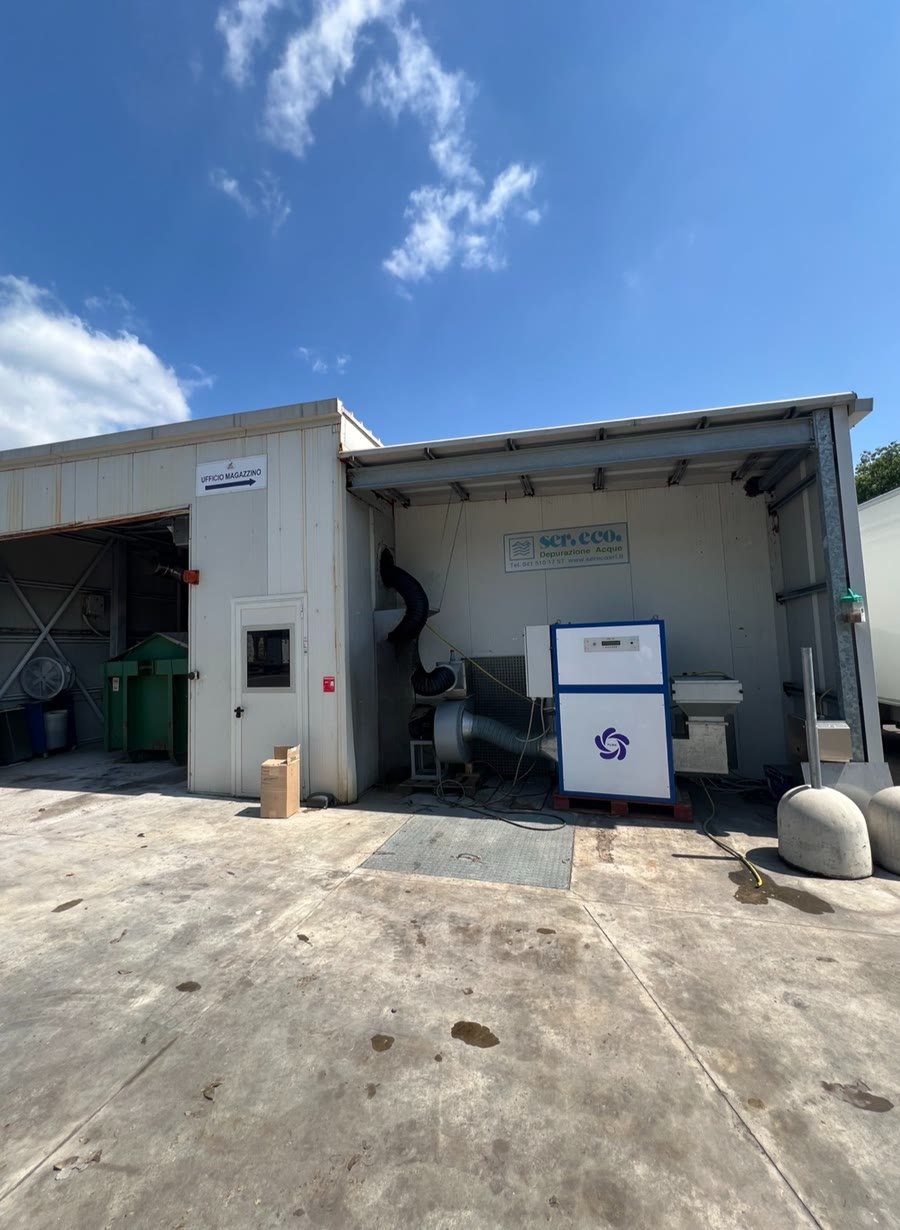
When there is no room for a biofilter, when the load peaks, when you do not want to create a second waste stream, and when water and chemicals are a problem in themselves. PURA replaces thermal oxidisers, activated carbon and biofilters with one process, and connects to the ductwork you already have.
For odour it is the indirect system: the reactor stays outside the duct and injects activated air at a single point. For volatile organic compounds it is the direct system, where the plasma is generated inside the duct and the whole flow passes through it. The chemistry is explained on the cold plasma page.
Questions
Straight answers.
Which technology is the cheapest?
It depends on how long the plant runs. Masking agents and activated carbon cost little on day one and a lot every year. An oxidiser costs a lot up front and a lot on the meter. The honest comparison is over ten years, counting investment, energy, consumables and disposal together.
Can two technologies be used in series?
Yes, and it is normal when the inlet load is very high. A first stage can take out the bulk of the load and leave the final stage a manageable job.
How is odour measured?
By dynamic olfactometry to EN 13725, which gives the result in odour units per cubic metre. It is the method laboratories and authorities use, and the only comparison that counts.
Does plasma work on any odour?
It works on oxidisable molecules, which is most industrial odorous substances, starting with sulfur compounds. Send us your flow and what you are treating: if plasma is wrong for your case, we will say so.
Next step
Tell us the number and we will tell you if it works.
The flow rate in m³/h, the sector and what you are treating is enough for a first honest answer.
Send us your flow Odour removal