When it is no longer enough
A biofilter works, as long as the process stays the same.
A well managed bed abates well and is cheap to feed. The trouble almost always comes from the same few things, and anyone who runs a plant recognises them at once.
Humidity and temperature. The bacteria work inside a narrow window. If the bed dries out or cools down, performance falls before the complaints tell you.
Channelling. After heavy rain, or as the media compacts, the air finds the easy path and crosses the bed untreated.
Load peaks. A biological bed follows changes of shift and product badly: the bacterial population does not adapt in half a day.
Space and media. It takes up surface many plants do not have, and the media has to be turned, topped up and eventually replaced, with the disposal that follows.
The comparison
What a biofilter asks for, what plasma asks for.
Biofilter
- Surface, often hundreds of square metres
- Humidity and temperature to keep in range
- Media to top up and replace, with disposal
- Channelling after heavy rain
- Slow response to load peaks
PURA, cold plasma
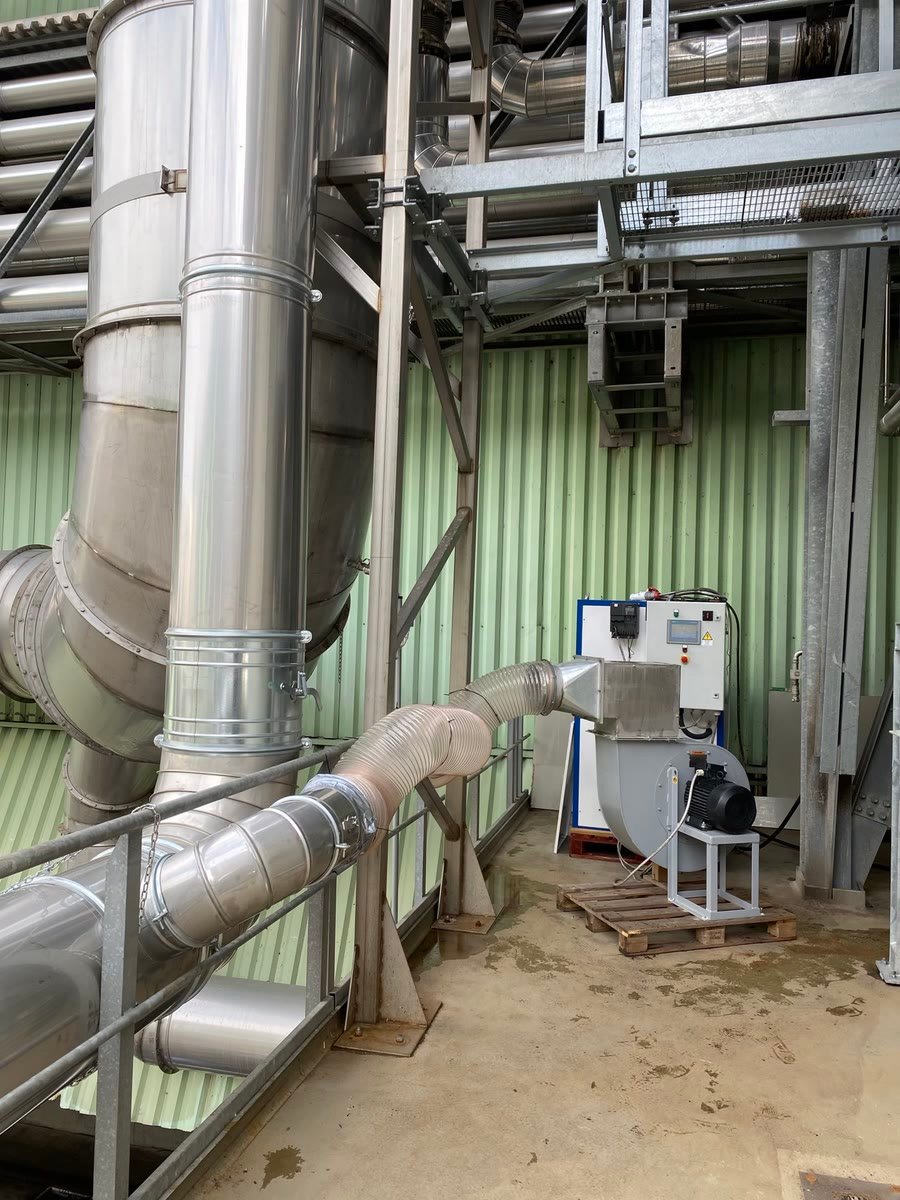
- A cabinet sized reactor
- No water, no reagents, no living bed to keep alive
- No consumable media and no secondary waste
- Ties into the existing ductwork at one point
- Adjustable parameters that follow the peaks
The comparison with every other technology, scrubbers, activated carbon and oxidisers included, is on the technologies compared page.
Replace it, or relieve it
What is already there is not always thrown away.
When the biofilter is undersized, or there is no longer room to maintain it, the plasma system replaces it: PURA replaces thermal oxidisers, activated carbon and biofilters with one process.
There are cases, though, where the existing bed is still a good plant and the problem is the load reaching it. There it is worth looking at a treatment upstream, taking out the heavier part of the load and leaving the bed a manageable job. Which of the two makes sense is decided on the numbers of your plant, not in the abstract: send us the flow rate and the odour units in and out, and we will tell you what fits.
Questions
Straight answers.
How much space does it need against a biofilter?
Far less. On the indirect system the reactor is a cabinet with a modest clean-air intake, and the large duct stays yours. There is no bed to house.
Do we have to stop the line to install it?
The system is modular and plug and play. On the indirect system one injection point is added to the existing duct, so the main line stays as it is. Tell us your layout and your shutdown window and we will give you a real schedule.
Does the performance hold over time?
The plasma is set to the flow and the load, and re-set when the process changes, rather than fixed at commissioning. There is no bacterial population to keep alive.
What does it consume?
Electricity only, and it stays low because the air is never heated. There are no materials to buy and no disposal to pay for.
Next step
Tell us the number and we will tell you if it works.
The flow rate in m³/h, the odour units and the limit you have to meet are enough for a first honest answer.
Send us your flow Odour removal